Archive for July 15th, 2009
In terms of legal gambling, Arkansas is best known for the Oaklawn Park horse racing track in Hot Springs and also for a dog track in West Memphis. Yet the real story of gambling in Arkansas involves wide-open illegal casinos in Hot Springs (in Garland County) that operated for over a century with connections to many of the leading mobsters in the land. In the mid-1950s, reform governor Orval Faubus sought to close down the gaming. Local Garland County judges overruled his efforts, however, and Faubus dropped the issue. After a staunch antigambling Baptist minister was elected to the legislature, the issue was reopened. He pushed a resolution demanding that the governor shut down the casinos. In 1963 the governor responded. After he did so, the citizens of Hot Springs circulated petitions to legalize casinos. The question was put on the ballot in 1964. The campaign for casinos was led by the local chamber of commerce; however, it was opposed by both Faubus and his 1964 opponent, Winthrop Rockefeller. Arguments that the state could experience a financial windfall from casinos fell on deaf ears, and the voters defeated casinos by a vote of 318,000 to 215,000. The doors of the casinos have been closed since then, but the casino proponents keep trying to win public support. In 1984, another petition was presented to the voters. Again, Garland County residents led the campaign. The state’s young governor, Bill Clinton, opposed it. His wife, Hillary, led the campaign against casinos with a statewide speaking tour. Voters said no by a 71 percent to 29 percent margin. In 1996, voters said no again by the same overwhelming margin. This time, the appeal had been not to produce state revenues but rather to meet the competition from riverboat casinos in surrounding states. The dreams of returning to the glory days of gangsters and excitement in Hot Springs remain, but all the gambling is confined to the short racing season each summer.
A proposal was put forth in the 2000 election that would have allowed six counties to have local option votes on casino gambling. The voters of Arkansas defeated casinos one more time.
<
In 1908, all gambling activity was banned in Arizona Territory in an effort to win congressional support for statehood. By mid-century, the state of Arizona had legalized pari-mutuel horse-race and dog-race betting and had also established active charity gambling operations. The state has also had a lottery since 1991. When Las Vegas Nights were authorized, commercial gambling suppliers actually took slot machines around to the events. The state also permitted the sale of slot machines, and in the 1980s, several businesses were importing used machines from Nevada and repairing and reselling them throughout the country. The businesses were supplying many of the machines to illegal operators, yet the state took no direct actions to stop the sales.
The many Native American tribes of the state were therefore set back when the state refused to negotiate a compact for casino gambling. After several years of legal maneuvering, the tribes won a federal court order mandating negotiations, and in the early 1990s tribal bingo halls were converted into tribal casinos. Eventually over twenty tribes established casinos; the largest ones, in the Phoenix area, are operated by the Ft. McDowell, Ah-Chin, and Salt River Pima tribes.
<
Argentina has all major forms of gambling: casinos, slot machine parlors, lotteries, bingo halls, racetracks, and a variety of lotteries. The 34 million citizens occupy a land base about one-third the size of the United States. The country is divided into twenty-eight provinces, plus the national district of Buenos Aires City. Both the provinces and the national government have authorized lotteries, casinos, and other forms of gambling. Until the 1990s, the government operated almost all of the gambling; since then a privatization drive has brought many new casino organizations to the country, upgrading that form of gambling. Until very recently, no casino gambling was allowed in the national city of Buenos Aires; however, a dockside ship now offers over 300 slot machines and nearly fifty tables for gamers.
Casino gaming has been common in Argentina, starting in colonial days of the eighteenth and early nineteenth centuries when viceroys from Spain governed the land. At that time and even after national independence in 1810, casinos were privately owned and locally licensed. This structure of minimal regulation and local control changed drastically in the mid-twentieth century.
As in most Latin American politics, a chief executive and his appointed council, as opposed to a broad representative legislative chamber, control
government. This pattern of executive rule derives from colonial traditions and cultural expectations. Military governments also have been common in the region. Argentina’s governmental structures fit these patterns. In 1943, General Edelmiro Farrell assumed the role of “keeper of the national conscience” after deposing the civilian government. His selected council included General Juan Peron, who was the minister of war, the vice president, and the secretary of labor. General Peron succeeded to the presidency as the head of the new Argentine Labor party in 1946. His election resulted from widespread support from the working classes and the Catholic Church. He remained the leader and virtual dictator until other military officers deposed him in 1955. Many changes occurred under the leadership of Farrell and Peron, including the structure of casino operations. Peron advanced industrialization programs requiring increased national control at the expense of provincial powers. He also fostered public ownership of enterprise.
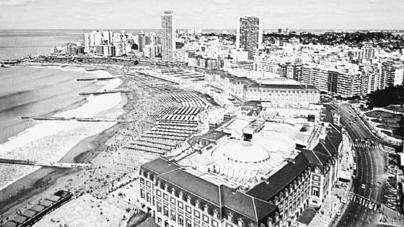
A view of Mar Del Plata, the largest casino in South America, located 200 miles south of Buenos Aires.
In 1944, a presidential decree closed all private casinos in Argentina. The national government controlled all casinos from then on. One consequence of this action, remaining to this day, was the closure of casinos in the national capital city of Buenos Aires and its suburbs. This decision influenced the development of South American gaming. Casinos in Argentina, Uruguay, Chile, Ecuador, Colombia, and Surinam now market their properties to wealthy Buenos Aires players. The other major target area is Brazil, which also lacks legal casinos.
The National Lottery Administration (La Lotteria de Beneficial) has operated a national drawing since 1893. It now oversees the publicly owned casinos for the national government. In 1947 the administration created a casino commission to direct operations. The commission consists of representatives of the Ministries of Finance and Labor and the National Bank.
The first casinos authorized to be part of this organization opened in the beach resorts in the province of Buenos Aires, about 200 miles from the capital city. Casinos operating as private casinos in Mar del Plata, Necochea, and Miromar (December 1944) continued as national government casinos. In 1945, the government nationalized the casino at Termas de Rio Hondo, a hot springs resort in the province of Santiago del Estero. A decree in 1946 reiterated that all casinos were under the jurisdiction of the national government but recognized that provinces could prohibit gaming within their borders.
Despite a decree in 1947 that placed the National Lottery Administration under the minister of the interior, two years later the minister of finance assumed the responsibility. Casino revenues were to be spent on social work, health, and urban sanitation programs. Later additions to the list of gaming recipients were schools, universities, local governments, tourism programs, medical foundations, and the Eva Peron Foundation. The government set admission charges for players and fees for exchanging checks and purchasing chips. In 1951, the government assessed a fee of 0.5 percent of the drop but later eliminated it.
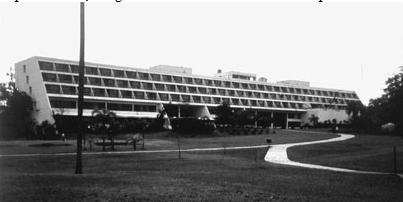
The international hotel overlooking the Iguasu Falls on the Argentina-Brazil border.
The national casino system expanded by nationalization of a private casino in Mendoza in 1947 and the creation of a casino annex at Mar del Plata in 1949. In 1954, casinos opened at the snow skiing and lakes resort of Bariloche in Rio Negro Province and at Termas de Reyes in Jujuy Province. Another casino opened at Termas de Rosario de la Frontera in Salta Province in 1959.
In 1963, a national casino opened at the edge of the great Iguazu Falls in Misiones Province. Casinos came to Alta Gracia and La Cumbre in Cordoba Province in 1971. The provinces of Corrientes and Chaco and the city of Parana in Entre Rios Province received authorizations for casinos in 1972. In the same year, a new national casino opened in the seaside resort of Piromar in Buenos Aires Province. Later in the decade, the remote coastal cities of Rivadavia and Puerto Madryn in Chubut Province and the interior city of Tandil in Buenos Aires Province established casinos. A seasonal casino in the oceanside resort of Las Grutas in Rio Negro Province also began operations.
After the fall of the final Peron government in the mid-1950s, the interior provinces tried to reassert autonomy over many public policy areas previously dominated by Peron officials. Several provinces wanted their casinos back.
In 1960, the national casino at Mendoza closed, and the provincial government assumed control of gaming. In 1961, the casino at Termas de Rio Honda was transferred to the provincial government of Santiago del Estero. In 1962, a presidential decree authorized provincial participation in all revenues from the national casinos. Subsequently, the provinces acquired the casinos in Salta and Jujuy. These and other provincial governments started province-operated casinos. The interior provinces of San Luis, San Juan, La Rioja, Tucuman, Santa Fe, Misiones, and Corrientes now have such casinos.
A movement toward privatization on a national level began in the mid-1980s. The public treasuries of the nation faced trouble from Argentina’s continuing economic crisis. The incentives for generating revenues by sales of casino properties were present.
The central government negotiated with the province of Rio Negro to transfer the national casino at Bariloche. In the early 1980s, the government of Mendoza Province had been anxious for resort developments. Ernesto Lowenstein saw the possibility of developing a world-class ski resort at Las Lenas on the edge of the Andes. In exchange for taking a risk with his development, he asked for a casino concession. The province was happy to comply with his desires. The resort opened in 1985, and two years later, a casino began operations. The Lowenstein Resort Company owns the casino, which Casinos Austria operates under a management contract. In 1989, the provincial government granted a second private casino concession to the developers of the new Ora Verde Hotel in Mendoza City. These two private casinos, the first in over forty years in Argentina, were the impetus for the privatization of the existing government casinos at both the national and provincial levels. Other new private casinos were also authorized, and the Mirage organization of Las Vegas was instrumental in starting a major facility at Iguasu Falls at the Brazilian border.
The National Lottery Administration also controls and administers other gaming. A major track near Buenos Aires offers horse racing. Three tracks along with fifty offtrack betting facilities had a total handle of around $300 million a year in 1997, the most recent year for which information is available. Another form of legal gaming is parlay betting on soccer games. The administration also offers various lottery products. Additionally, the provincial governments run lottery operations.
Antigua and Barbuda, in the Leeward Islands of the West Indies, constitute an island nation that was formerly under the control of Great Britain. The government allows casino gambling, bingo halls, horse-race betting, a lottery, offtrack betting, and sports betting on the Internet. There are five casinos in the capital city of St. John’s and one in the city of Deep Bay. The minister of finance licenses all the casinos. A license may be given to any person who owns a hotel that markets rooms to tourists.
The Antiguan government encourages casino development and is willing to offer new licenses to those wishing to start casinos. Larger hotels pay an annual licensing fee of $300,000; smaller hotels pay $100,000. Additionally they pay a tax of 15 percent of their gaming revenue. Although local residents may come to the casinos, the casinos are prohibited from advertising gaming to the local public.
In 1985, one of the largest properties, the Halcyon Cove, instituted a small gambling junket program in which tourists fly in from cities in the United States on inclusive tours. Because checking credit players incurs an element of risk, the Halcyon Cove does not subscribe to a credit check service based in the United States (unlike other junket destinations in the Caribbean). Therefore, to ensure against potential problems, the hotel has received written guarantees from junket organizers, who cover debts owed by the players they bring to the casino.
In operating the casinos on Antigua, the gaming management must realize that vacationers do not travel to the island in order to gamble. They come to relax, rest, and enjoy the weather and scenery. Gambling is only one amenity to fulfill the entertainment needs of the guests. It is not a major profit center for the management or government.
<
|