Archive for August 11th, 2009
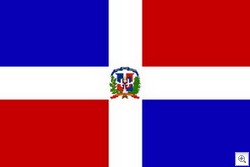 The Dominican Republic shares the Greater Antilles island of Hispaniola with Haiti, with which it has shared many attributes, especially an impoverished condition. In the early 1800s, the country was ruled in succession by French, Spanish, and Haitian military forces. When not ruled by foreign forces, the Dominican Republic has suffered at the hands of indigenous dictatorial rule as well as having been dominated by commercial interests of the United States, aided by the U.S. military. During the rule of strongman Raphael Trujillo (1930–1961), foreign casino interests established properties that were essentially governed by the dictator, largely for his benefit as well as that of the owners. The years from 1961 to 1966 were turbulent and unstable. In 1965 U.S. troops invaded as a measure to preserve order and preclude intervention by Cuba. The troops left in 1966, and the stage was set for the installation of a democratic government. Democracy has survived over the remaining years of the twentieth century and into the twenty-first century. The Dominican Republic shares the Greater Antilles island of Hispaniola with Haiti, with which it has shared many attributes, especially an impoverished condition. In the early 1800s, the country was ruled in succession by French, Spanish, and Haitian military forces. When not ruled by foreign forces, the Dominican Republic has suffered at the hands of indigenous dictatorial rule as well as having been dominated by commercial interests of the United States, aided by the U.S. military. During the rule of strongman Raphael Trujillo (1930–1961), foreign casino interests established properties that were essentially governed by the dictator, largely for his benefit as well as that of the owners. The years from 1961 to 1966 were turbulent and unstable. In 1965 U.S. troops invaded as a measure to preserve order and preclude intervention by Cuba. The troops left in 1966, and the stage was set for the installation of a democratic government. Democracy has survived over the remaining years of the twentieth century and into the twenty-first century.
The legislature of the Dominican Republic formalized a set of rules for casino operations in a law that was passed in 1968. Under the 1968 law, the casinos must be in top-rated tourist hotels that have 200 rooms. Exceptions were made for two casinos in smaller hotels that had been operating before 1968. All licensed hotels since the law was passed are in larger hotels that market their rooms to foreign tourists.
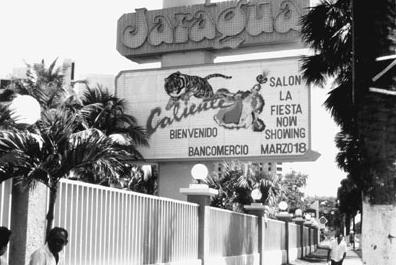
The Jaragua Casino of Santo Domingo features major Las Vegas style shows.
The 1968 act outlawed slot machines. Slot machines had operated in casinos before that time; however, the government felt that the machines appealed too much to poorer local residents, who did not have the resources to meet minimum play requirements of the table games. The machines were permitted to come into the casinos with a new law passed in 1988; however, the government imposed a higher tax on machine wins than on other wins. The government wished to encourage the casinos to have only higher-denomination machines (one dollar per play or more) rather than nickel and dime machines that would appeal to the poorer people. In contrast, poorer people can purchase passive lottery tickets each week in order to satisfy their gaming urges. Besides that, the lottery directs its profits to programs for the poor and also employs many poor people to sell the tickets.
The casinos have two sets of books, one for play in U.S. currency and the other for play in Dominican currency. There is no currency exchange. There are two sets of chips – U.S. and Dominican. There are also specifically designated chips for credit play. This provision for special chips enables the casino to ensure that loans are repaid at the time a winning player would be “cashing-in”. The casinos follow two methods of taxation. For casino wins in Dominican currency, the casinos pay a tax of 20 percent on the gross win. For players using chips valued in U.S. dollars, the tax is paid when the chips are purchased. It is a 2 percent drop tax; that is, for each $100 of chips purchased, the casino pays $2 in tax. There is no win tax. The casinos are reluctant to offer credit to players, especially local players. They had a history of players refusing to pay back the casino owners who, for the most part, are foreigners – usually Americans (see Honduras for a discussion of the same problem). Locals have considered it an affront to be challenged in court by “rich foreigners” for repayment of money they have “already returned” to the casinos via their losing play. Therefore, the casinos contract with local residents who will “guarantee” repayment of the loans. If the player loses and does not repay the loan in a rapid fashion, the casino asks the guarantor to collect the loan. The guarantor then pays 70 percent of the loan and is given the right to collect the entire loan and to keep the 30 percent differential as a commission. The guarantor is also empowered to take the loan obligation to court, where he is well acquainted with the judicial personnel and is not subject to antiforeign accusations.
There are several premium casinos in Santo Domingo, the capital city – a city that was settled by Bartholemew Columbus, the brother of the explorer. The leading casino is the Jaragua, which is owned by Americans. It features a Las Vegas–style floorshow and a set of fountains that was designed by the architect who designed the fountains at Caesars Palace. Koreans own the next leading property, which is located at the Embajador Hotel. Most of the dealers in these facilities are citizens of the United States, and many have had experience in Las Vegas casinos. There is no restriction on such foreign labor. Other major casinos are in the Sheraton, Concorde, Lina, and Centanario hotels. Altogether, there are a dozen hotels in the Santo Domingo area.
Santo Domingo is a historical city that should appeal to a tourist with a craving for evidence of the founding of the oldest European-settled city in the hemisphere (1496) and a desire to see buildings still standing at the oldest university in the hemisphere (founded in 1538). Most casino-oriented tourists, however, like things such as beaches and room amenities. Santo Domingo falls short. It has no sandy beaches, and its electrical supply is challenged. Every day the power in the hotel—casino and rooms—goes out for some time. The casino keeps essential functions going with backup facilities; however, tourist facilities such as Jacuzzis, television, restaurant areas, and telephones temporarily go down. For tourism, however, the Dominican Republic is fortunate to have another location with ample power and with top-class natural beaches – the north island shore called Puerto Plata. Its golden beach extends for nearly sixty miles. Several new casino hotels have been constructed in Puerto Plata within the last decade, the leading one being a Jack Tar facility with 300 rooms and a 40,000-square-foot casino area.
The Dominican Republic competes with Puerto Rico for casino players – each has its advantages and disadvantages. In Puerto Rico, English must be spoken at the casinos, whereas it is not mandated in the Dominican Republic. Puerto Rico has superior airline service, whereas the Dominican Republic has limited direct flights to the United States. On the other hand, labor costs are much lower in the Dominican Republic, which translates into lower hotel costs for tourists—and lower costs for casinos that are offering free rooms to players. The other advantage of gaming in the Dominican Republic is shared with other Caribbean venues: No reports are given to the Internal Revenue Service of the United States regarding players activities – how much they wager and how much they win.
The Dominican Republic was one of the first offshore jurisdictions to enter the market for sports bettors. They now offer bets through telephone service as well as over the Internet.
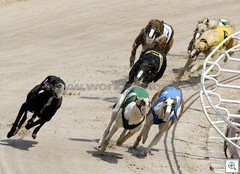 Dog racing began in the United States in 1919 with the opening of a greyhound track in Emeryville, California. Although gambling on dog races is permissible under the law in eighteen states, today there are tracks in only fifteen states. Since 1919, there have been tracks in over forty states at one time or another, although in most cases betting on races was not formally sanctioned by the law. Currently in the Western Hemisphere there are also tracks in the U.S. dependency of Guam, in Mexico (two states), and in Panama. Previously there were tracks in Puerto Rico, Haiti, the Dominican Republic, Barbados, and Montreal, Canada. The forty-nine operating tracks in the United States employ 30,000 people and generate approximately 13 percent of the pari-mutuel betting in the United States. In 1998, the tracks won $494 million (including offtrack and intertrack wagering, and after prizes given to players). Wagering totals have remained stable, increasing an average of 1 percent a year since 1982. All legal wagering at dog tracks today is through pari-mutuel betting systems. Systems operate both on track and through offtrack or intertrack parlors. Dog racing began in the United States in 1919 with the opening of a greyhound track in Emeryville, California. Although gambling on dog races is permissible under the law in eighteen states, today there are tracks in only fifteen states. Since 1919, there have been tracks in over forty states at one time or another, although in most cases betting on races was not formally sanctioned by the law. Currently in the Western Hemisphere there are also tracks in the U.S. dependency of Guam, in Mexico (two states), and in Panama. Previously there were tracks in Puerto Rico, Haiti, the Dominican Republic, Barbados, and Montreal, Canada. The forty-nine operating tracks in the United States employ 30,000 people and generate approximately 13 percent of the pari-mutuel betting in the United States. In 1998, the tracks won $494 million (including offtrack and intertrack wagering, and after prizes given to players). Wagering totals have remained stable, increasing an average of 1 percent a year since 1982. All legal wagering at dog tracks today is through pari-mutuel betting systems. Systems operate both on track and through offtrack or intertrack parlors.
Today racing is confined essentially to one breed of dog, the greyhound. Evidence of the domesticated greyhound is found in Egyptian carvings that have been dated back to 2800 b.c. Early Greek civilizations probably named the dog Greekhound, and a corruption of that word yielded its present name. Others suggest that the dog has a grey tone in its face and on its head as it ages—almost a human-like quality. The Egyptians may have used the greyhound for hunting hares and gazelles, but the first recorded evidence of this activity came from the Roman era. The Romans also began the sport of “coursing.” Hares would be placed in a large field, and the dogs would be in contests to see which one could run the poor animal down the fastest. In England, coursing events were formalized. As early as 1576, meetings were held in which two greyhounds would race across a field to reach a trapped animal in a fixed spot. Dogs were bred for the events. A certain breed of greyhound resulted from a cross and recross with English bulldogs. A resulting dog named King Cob excelled, and today all the racing greyhounds worldwide can show lineage back to this one dog. In 1836, the Waterloo Cup competition began, and by 1858, a National Coursing Association was established in England to govern the events.
Coursing began in the United States with an event in Kansas in 1886. Animal rights activists stifled growth in the competition, however, as they protested the killing of jackrabbits that were used in the events. Their protests led dog enthusiasts to seek out alternative, nonanimal lures or bait. Owen Patrick Smith answered their call. He experimented with stuffed jackrabbits that he mounted on motorcycles. By 1920, he had received a patent for an artificial mechanical lure that he used in Salt Lake City. Finally he contrived a mechanical rabbit that could be run around a track in front of a pack of greyhounds. He put his device into use at the country’s first dog track, which he called the Blue Star Amusement in Emeryville, California, near the present-day Oakland Bay Bridge. Smith’s first venture was not successful, but he did better as he took the idea of greyhound track racing to other locations. In 1921, tracks opened in Tulsa, Oklahoma; East St. Louis, Illinois; and Hialeah, Florida. A track that opened in Chicago in 1922 proved to be successful. In 1925, there were seven tracks; by 1930, there were over sixty tracks in the United States. In 1926, Smith founded the International Greyhound Racing Association, which works with the American Kennel Club to register dogs and regulate racing. Owen Smith lived long enough to see his sport flourishing, but he died in 1927, before he could reap major profits from its success.
Coursing activity waned with the introduction of dog track racing; however, coursing is still found in the United States and elsewhere, but no live lures are used. Events are governed by the American Sighthound Field Association and the American Kennel Club.
Although dog racing was here to stay after the 1920s, in many places it did not stay long. Of the tracks that opened before 1930, only four can be counted among the active tracks today. To be profitable, the tracks allowed bookies to come in and set up shop next to the racing areas. They gave a healthy fee to the track for the right to do business, but they also had to bribe the local sheriff in many places, as the betting was not legal. As political tides would turn, the sheriff would be persuaded to ban events. Opponents also seized upon opportunities to discredit the sport with revelations that mobsters, such as Al Capone, were involved in track operations. He reportedly owned an interest in the Hawthorne (dog) Race Track in Chicago. The political forces of opposition would sometimes be directed by horse track interests who did not enjoy the competition. A Miami track initiated the innovative use of night racing in order to placate the horsemen, and other dog tracks imitated the practice. Pari-mutuel racing was initiated with greyhound events in Montreal in 1928, and when Florida legalized the betting system for its horse tracks, the dog track owners sought and won legislative approval for pari-mutuel betting as well.
Dog tracks struggled through the Depression years and the early 1940s as the nation’s attention was consumed by economic and war matters. But racing survived. According to Thomas Walsh (1991, 8–9), in the early 1940s, a Massachusetts operator actually used monkeys as jockeys, mounting them on the greyhounds’ backs. He had his monkeys tour throughout the East as a serious effort to make the races more interesting. The experiment was novel and drew some spectator interest, but it proved not to be at all functional. Racing was closed down in the later war years but was revived after peace resumed, and in 1946, an American Greyhound Track Owners Association started operations. Today this organization joins with the National Greyhound Association in setting forth the rules for all races. The latter organization registers all dogs and maintains records. Dogs must be tattooed (on their ears), and breeding is regulated. Artificial insemination is permissible, whereas it is banned for horse breeding. A National Greyhound Hall of Fame opened in 1973 in Abilene, Kansas.
Dog races have the same kind of officials—secretaries, paddock judges, patrol judges, and so on – that are found at horse tracks. Ownership and training functions are also similar. Of course there is no jockey, and exercise workers are not significant at the kennels. The structure of betting is very similar to that on horse racetracks. Newborn greyhounds are given about sixty days of general freedom before their training begins. Then they are tattooed, registered, and started in walking and running exercises. When the greyhound is fourteen months old, it is either sold to a racing kennel or placed there by the owner. Dogs start racing several months after training begins. Both male and female greyhounds run, but the males tend to have longer careers – up to five years. The dogs race from 5/16th mile to 7/16th mile. The dogs have a grading system that is used by racing secretaries to create well-matched races. Dogs will race every two to three days during the peak of their careers. Some stakes races have prizes running into the hundreds of thousands of dollars; however, as with horse racing, dog ownership is not a good business venture. It is an activity tied to excitement, and many owners are in the game to be in the game, not to reap financial rewards.
A severe problem facing the dog racing industry has been the discarding of dogs that do not win. They are generally not put to pasture, sold as pets, or put to stud; they are killed. Over 8,000 dogs were killed during one five-year period in the 1970s. In response to the issue, an organization called Retired Greyhounds as Pets (REGAP) was formed in 1982 by Ron Walsek, an employee at a racetrack, to facilitate the adoption of the animals. Today there are 100 groups associated with REGAP. They have brought about over 15,000 adoptions. The adoption costs are very low—less than fifty dollars. The animals are extremely gentle, well mannered, intelligent, and affectionate. Thousands of people are finding that they are wonderful pets around children and in the home.
Tags: , ,
|
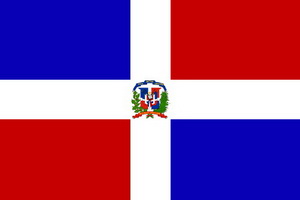 The Dominican Republic shares the Greater Antilles island of Hispaniola with Haiti, with which it has shared many attributes, especially an impoverished condition. In the early 1800s, the country was ruled in succession by French, Spanish, and Haitian military forces. When not ruled by foreign forces, the Dominican Republic has suffered at the hands of indigenous dictatorial rule as well as having been dominated by commercial interests of the United States, aided by the U.S. military. During the rule of strongman Raphael Trujillo (1930–1961), foreign casino interests established properties that were essentially governed by the dictator, largely for his benefit as well as that of the owners. The years from 1961 to 1966 were turbulent and unstable. In 1965 U.S. troops invaded as a measure to preserve order and preclude intervention by Cuba. The troops left in 1966, and the stage was set for the installation of a democratic government. Democracy has survived over the remaining years of the twentieth century and into the twenty-first century.